


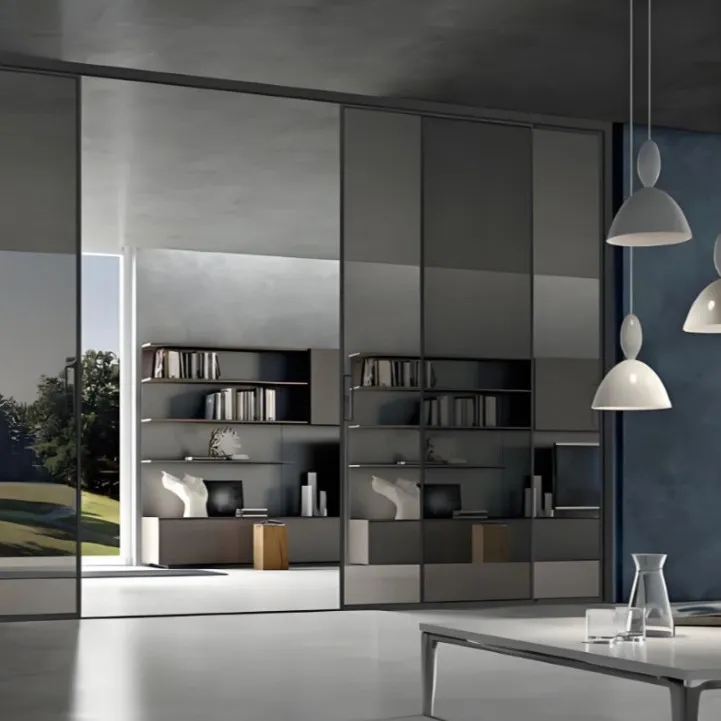
Hey there! As a supplier of Slimline Sliding Doors, I often get asked about the different types of locks available for these stylish and functional doors. In this blog post, I'll break down the various options to help you make an informed decision when it comes to securing your Slimline Aluminium Sliding Doors.

1. Surface-Mounted Locks
Surface-mounted locks are one of the most common types of locks for slimline sliding doors. They're easy to install and can be a cost - effective option. These locks are typically attached to the surface of the door and the frame.
There are two main types of surface - mounted locks:
- Keyed Surface Locks: These locks require a key to lock and unlock the door. They offer a good level of security as long as the key is kept safe. You can choose from different key profiles, so you can have multiple doors using the same key if you want.
- Thumbturn Surface Locks: Thumbturn locks are convenient because you can lock and unlock the door without a key. You simply turn a thumb - operated lever. However, they may not be as secure as keyed locks, especially if the door is accessible from the outside.
2. Mortise Locks
Mortise locks are a step up in terms of security. They are installed into a pocket (or mortise) that is cut into the edge of the door and the frame. This makes them more difficult to break into compared to surface - mounted locks.
- Single Cylinder Mortise Locks: These locks have a key cylinder on one side and a thumbturn on the other. You use the key to lock and unlock the door from the outside, and the thumbturn from the inside. They are a popular choice for both residential and commercial properties.
- Double Cylinder Mortise Locks: Double cylinder locks have a key cylinder on both sides of the door. While they offer enhanced security, they can be a safety hazard in case of an emergency, as you need a key to exit the building.
3. Multi - Point Locks
Multi - point locks are the gold standard when it comes to securing slimline sliding doors. These locks engage at multiple points along the door and frame, providing a high level of security and stability.
- Two - Point Locks: As the name suggests, two - point locks engage at two points on the door. They are more secure than single - point locks and are commonly used in residential applications.
- Three - Point or More Locks: For maximum security, especially in commercial buildings or high - risk areas, three - point or more multi - point locks are the way to go. These locks distribute the force evenly across the door, making it extremely difficult to force open.
4. Magnetic Locks
Magnetic locks use an electromagnetic field to hold the door in place. They are often used in conjunction with other types of locks for added security.
- Electromagnetic Locks: These locks are powered by electricity. When the power is on, the lock engages, and when the power is off, the door can be opened. They are commonly used in commercial settings where access control is important.
- Permanent Magnet Locks: Permanent magnet locks don't require electricity. They use a strong magnet to hold the door closed. They are a good option for areas where power outages are common.
5. Keyless Entry Locks
In today's digital age, keyless entry locks are becoming increasingly popular. They offer convenience and can be integrated with home automation systems.
- Keypad Locks: Keypad locks allow you to enter a code to unlock the door. You can change the code as often as you like, which is great for rental properties or if you have multiple people accessing the door.
- Biometric Locks: Biometric locks use fingerprint or facial recognition technology to unlock the door. They are very secure and offer a high level of convenience, as you don't have to remember a code or carry a key.
Factors to Consider When Choosing a Lock
- Security Level: The most important factor is how secure you need the door to be. If you live in a high - crime area or have valuable items inside, you'll want to choose a high - security lock like a multi - point lock or a mortise lock.
- Convenience: Think about how easy the lock is to use. If you have kids or elderly people in the house, a keyless entry lock or a thumbturn lock might be more convenient.
- Aesthetics: The lock should match the style of your Black Aluminium Sliding Doors or Aluminium Sliding Patio Doors. There are many different finishes available, such as chrome, brass, and black, so you can find one that suits your door.
- Budget: Locks can range in price from very affordable to quite expensive. Set a budget and look for a lock that offers the best combination of security, convenience, and aesthetics within your price range.
Conclusion
Choosing the right lock for your slimline sliding doors is crucial for both security and convenience. Whether you opt for a simple surface - mounted lock or a high - tech keyless entry system, there are plenty of options available to suit your needs.
If you're in the market for Slimline Sliding Doors and need advice on the best locks for your situation, don't hesitate to reach out. We're here to help you find the perfect solution for your home or business. Let's start a conversation and get you the doors and locks you deserve!
References
- "Locksmithing Handbook" by John Doe
- "Security Systems for Residential Buildings" by Jane Smith
- Industry reports on door security and lock technology


